
Southern Utah storms can come out of nowhere. One afternoon it’s sunny, and an hour later wind is lifting tiles, hail is hammering the roof and water is coming through the ceiling. When that happens, you need the roof covered and the inside dried, fast.
Call (435) 429-2688. We answer 24/7, including nights, weekends and holidays, and we can often be there the same day. Mammoth Builders Roofing and Restoration is a roofing contractor and an IICRC Certified Firm with more than 25 years of experience. We tarp the roof, dry out the interior, and repair or replace both under one contract.
Monsoon season in Southern Utah runs roughly July through September. These storms are short, but they can pack a lot of force.
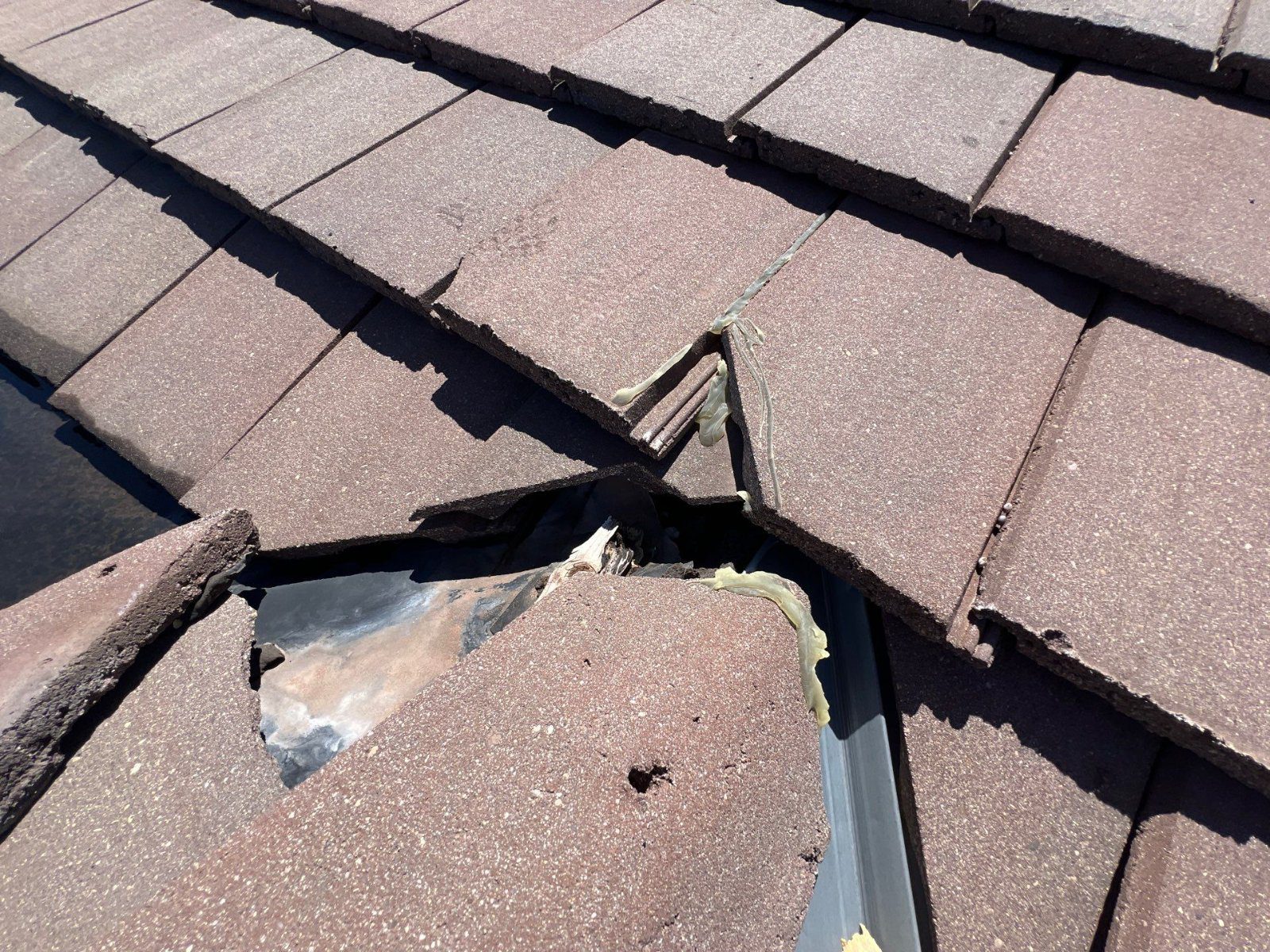
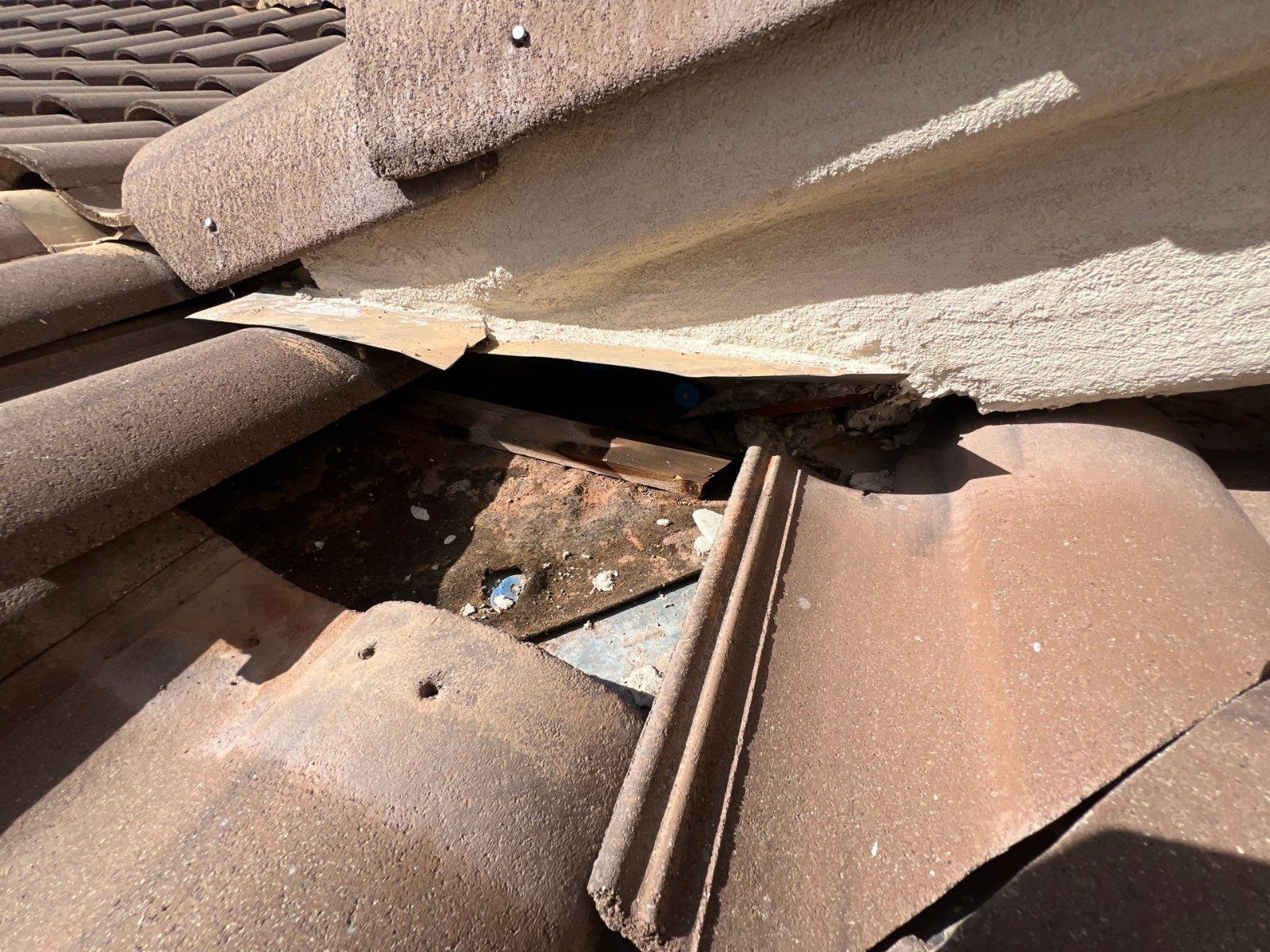
Strong gusts and microbursts, sudden downdrafts that hit the ground and spread out, can lift and break roof tiles, tear off shingles, peel back flat roof membranes and loosen flashing. Once a roof is opened up, the rain that follows goes straight in.
Hail can crack tiles, bruise or knock granules off asphalt shingles, dent metal and damage vents, gutters and skylights. Some hail damage is easy to spot from the ground. A lot of it isn’t, which is why a close-up roof inspection matters.
Intense rain can overwhelm gutters and roof drains, back up on flat roofs and find any weak spot in the underlayment. Flash flooding can push water into garages and living spaces from the outside. Either way, wet drywall, insulation and flooring need to be dried quickly.
For a deeper look at what monsoon season does to roofs here, read our post on roof storm damage during the Southern Utah monsoon.
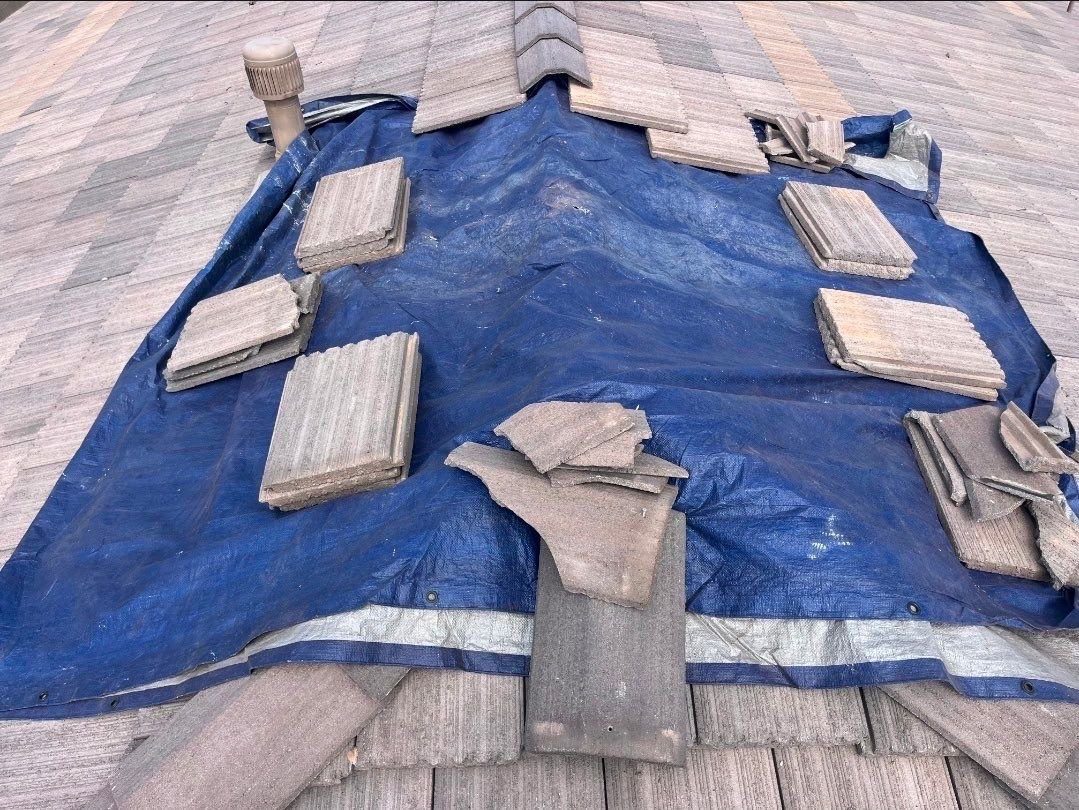
If your roof is open or leaking, the first priority is stopping more water from getting in. We install emergency tarps over damaged areas to protect the structure and your belongings until permanent repairs can be made.
Tarping a roof here takes some care. Walking on tile roofs the wrong way can break more tiles, and tarps have to be secured to hold up to the next gust. Our roofing crews work on tile, asphalt shingle, metal and flat roofs, and they know how each one needs to be covered. Quick tarping also shows your insurance company you took reasonable steps to prevent further damage.
If your roof is leaking right now, see our guide to emergency roof repair in St. George.
After a storm, we inspect the whole roof, not just the obvious damage. We look at:
Our no-cost roof inspection gives you an honest assessment of whether you need a repair or a replacement. If you’re weighing that decision, read roof repair vs. replacement in St. George.
When storm water gets inside, the clock starts. Mold can begin growing in as little as 24 to 48 hours. As an IICRC Certified Firm, we handle the inside of your home too:
Most drying takes about 3 to 7 days depending on severity and materials. Learn more on our water damage restoration page, and if moisture has already been sitting, see our mold remediation page.
After a storm, a lot of homeowners end up juggling a roofer, a water mitigation company and a general contractor, each with their own schedule and their own paperwork. Things fall through the cracks between them.
With Mammoth, one company handles it from start to finish under one contract: the tarp, the roof repair or replacement, the drying and the interior rebuild. You have one point of contact, and the roof and interior work are planned together. We work on residential roofs and commercial roofs, including tile, asphalt shingle, metal and flat or single-ply systems. Comparing materials for a replacement? Read tile vs. asphalt shingle roofing in St. George.
Storm claims depend on clear evidence of what the storm did. We document visible and hidden damage on the roof and inside the home with photos and detailed reports. We coordinate with your adjuster and help you understand what your policy may cover before work begins.
Every policy is different, and we can’t promise how a claim will turn out. Take your own photos, report the loss promptly, and keep receipts for emergency expenses. Learn more about our insurance claim support, read about a contractor’s role in Utah roof insurance claims, and avoid the top mistakes homeowners make with roof claims.
We’re a licensed and insured contractor based in St. George, providing storm damage restoration and roof repair across Washington County and Southern Utah, including St. George, Washington City, Hurricane, Ivins, Santa Clara, La Verkin, Cedar City, Bloomington Hills, Virgin, Pine Valley, Dammeron Valley and Brian Head. See all of our restoration services, our 24/7 emergency services, and our fire and smoke damage restoration page.
Monsoon season in Southern Utah runs roughly July through September. Storms can bring strong winds, microbursts, hail, heavy rain and flash flooding, often with little warning.
Keep everyone safe, move belongings away from the leak, put buckets down, and take photos. Stay off the roof. Then call (435) 429-2688. We answer 24/7 and can often tarp the roof the same day.
Some damage is visible from the ground, like missing tiles or shingles. Much of it, like cracked tiles, hail bruising or loose flashing, is only visible up close. A professional roof inspection is the safest way to know. We offer free inspections.
Many policies cover sudden wind and hail damage, but coverage depends on your policy and the condition of the roof. Check your policy or ask your agent. We document the damage, prepare detailed reports and coordinate with your adjuster, but we cannot promise a claim outcome.
Yes. We are a roofing contractor and an IICRC Certified Firm, so we can tarp and repair or replace the roof and also dry out and rebuild the interior, all under one contract.
It depends on how much of the roof is damaged, its age and the condition of the underlayment. On tile roofs, the underlayment often wears out before the tiles. After a full inspection, we will give you an honest recommendation.
Storm damage? Call (435) 429-2688. We answer 24/7. If the roof isn’t leaking right now, request a free inspection and we’ll check it over at no cost.